

Company News
HTML second test
HTML description second Testing
Discover more


Updated June 2026
Hassle-free travel with eSIM means getting mobile data abroad without hunting for local SIM cards, paying steep roaming fees, or waiting in airport kiosks. You install a digital plan on a compatible phone, switch it on when needed, and stay connected for maps, rides, payments, and messages almost immediately.
That sounds simple because it is simple — when you set it up properly. And that's the part many travelers miss. The best eSIM experience isn't just about buying data; it's about choosing a plan that matches your route, your phone, and how you actually travel. A weekend in Paris is one thing. A month through Japan, Thailand, and Singapore is another.
Search results in 2026 show the same pattern again and again: travelers want speed, fewer moving parts, and predictable costs. CNBC's May 2026 roundup of the best eSIMs for international travel framed eSIMs as a way to connect to local networks without swapping SIM cards. Apple's support documentation continues to position eSIM as a practical option for international travel on iPhone. And on Reddit and Quora, the questions are less about whether eSIM works and more about what goes wrong when people wait until landing to figure it out.
Most travelers don't realize how much friction sits inside the old way of staying connected. You land in Rome or Dubai, switch off airplane mode, and either your home carrier starts charging a painful roaming rate or you start looking for airport Wi-Fi just to order a cab. It's a bad system, mostly because the most important moment — arrival — is when you need connectivity fastest.
A travel eSIM removes that arrival scramble. According to Apple support guidance for international travel, users can store multiple SIMs and use eSIM on supported iPhone models, which is a big practical advantage if you want to keep your home number active while using a second line for data. That matters more than the marketing language. It means you can keep receiving bank alerts or two-factor authentication on your main line while using a separate travel data plan for Google Maps, Uber, WhatsApp, and translation apps.
The broader market is moving that way too. The GSMA has repeatedly pushed eSIM as a major shift in mobile connectivity, and even mainstream consumer coverage now treats travel eSIM as normal rather than experimental. CNBC's 2026 travel eSIM review specifically highlighted how prepaid eSIMs work in hundreds of regions. That's the real appeal — not novelty, just less mess.
And yes, there's a cost angle. People Also Ask results for 2026 repeatedly surface the question, “Is an eSIM cheaper than roaming?” because travelers have been burned before. In practice, prepaid travel eSIMs are often easier to control than a carrier roaming pass because you know exactly how much data you're buying upfront. No ugly bill surprises two weeks later.
Here's the thing: eSIM only feels effortless when a few basics line up. Your phone has to be compatible. The provider has to support the countries on your route. And the activation process has to be clear enough that you don't end up staring at a QR code in an airport queue while your ride driver is trying to call you.
The strongest providers usually focus on the same four areas: fast installation, flexible regional coverage, transparent prepaid data, and reliable support. ZetSIM fits directly into this category because it sells travel eSIMs for 185+ destinations, including local, regional, and global plans, and its knowledge base states that users can install the eSIM before traveling and activate it on arrival. That's exactly what frequent travelers want — setup before departure, not after landing when every small delay feels bigger.
What “hassle-free” usually means in real life:
Forum discussions show the same pain points. Reddit users in travel and iPhone threads keep asking about activation timing, data roaming settings, and whether WhatsApp still works. Quora threads focus on how to travel with eSIM “without hassle,” which tells you something important: people aren't worried about the idea of eSIM anymore. They're worried about setup mistakes. That's a much healthier market than it was a few years ago.
And if you're moving across borders — say Spain to France to Italy — regional coverage matters more than flashy promises. The convenience of one profile working across multiple countries is often worth more than a tiny discount on a single-country plan. Travelers hopping through Schengen destinations learn that fast.
Search results for eSIM in 2026 are packed with brand comparisons because that's how people shop in this category. They don't want theory. They want to know who offers regional plans, who supports quick setup, and who makes multi-country travel less annoying.
No single provider is perfect for everyone. Some focus on unlimited data, some on marketplace pricing, some on app experience. But if your goal is hassle-free travel with eSIM, the useful comparison points are simple: coverage breadth, activation clarity, and whether the plan structure matches real travel patterns.
| Provider | Best for | What stands out |
|---|---|---|
| ZetSIM | Travelers who want local, regional, and global flexibility | 185+ destinations, install-before-travel option, regional and global plans, app access, data and some data+voice+SMS plans |
| Airalo | Broad destination coverage and app-based buying | Widely known marketplace model; often data-only depending on destination |
| Holafly | Travelers who value convenience and higher-data plans | Frequently recommended for simple setup; reviews often mention convenience first |
| Nomad | Users comparing plans across popular destinations | Known for travel-friendly activation and destination-specific options |
| Ubigi | Frequent travelers and connected-device users | Often appears in device and car connectivity conversations alongside travel use |
If you're looking for the least complicated route, a provider with clear installation instructions and strong regional coverage usually beats a provider that merely has the lowest headline price. Cheap data isn't actually cheap if you waste the first two hours of your trip trying to make it work.
For travelers planning a Europe circuit, Southeast Asia itinerary, or a multi-stop business trip across the Americas, regional and global packages are often the difference between smooth travel and constant account switching. That's one reason ZetSIM's multi-country positioning matters.
This is where the easy experience is won or lost. The smartest move is to install the eSIM before you leave home, not after the plane lands. ZetSIM's own help content says travelers can activate before traveling and then use the plan once they reach the destination. Nomad content in search results also notes that travel eSIM activation often happens almost immediately when the device connects to a supported network. That's good news — but only if the profile is already installed correctly.
The basic setup flow is usually straightforward: choose your destination, confirm device compatibility, buy the plan, scan the QR code or install through the app, then switch on the eSIM line and data roaming when needed. But don't rush the details. iPhone and Android menus differ. Some phones label the travel line as “Secondary,” others as “Business” or “Travel.” If you've ever tried to sort this out in an arrivals hall, you know how strangely complicated a simple toggle can feel.
And don't ignore timing. Install early, activate at the right moment, and test your settings while you're still calm. That tiny bit of prep is what makes the rest feel frictionless.
The upside is obvious. No plastic SIM. No losing your home SIM in a hotel room. No queue at a kiosk in Bangkok or Barcelona. And because many plans are prepaid, budgeting is simpler. That's why reviewers and travel bloggers keep describing eSIMs as one of the easiest upgrades for international travel.
But there are downsides, and pretending otherwise is lazy. Search results from Airalo's own comparison content point out that many travel eSIMs are data-only, so you may rely on WhatsApp, FaceTime, Signal, or Zoom instead of traditional calling. People Also Ask results also surface a practical drawback flagged by WhistleOut: moving an eSIM between phones can be less convenient than physically swapping a SIM card. If your device breaks mid-trip, that becomes very real, very fast.
Compatibility is the other big one. Not every device supports eSIM, and not every carrier-unlocked situation is as unlocked as people think. Some travelers discover this at exactly the worst moment. Older budget phones, region-specific handsets, or carrier-locked models can spoil the plan before it starts.
Even so, the balance is shifting strongly toward eSIM for most international travelers. For a business traveler landing in Singapore, a student on a rail trip through Europe, or a family navigating Tokyo with two tired kids and three suitcases, convenience beats nostalgia. Physical SIM cards still work. They just don't solve the arrival problem as elegantly.
A travel eSIM is usually the smartest choice when you're visiting one or more countries for a short to medium trip and need immediate mobile data for navigation, transport, payments, and messaging. That's the sweet spot. City breaks, business travel, digital nomad hops, cruises with port stops, and multi-country itineraries all benefit from quick activation and prepaid control.
It also makes sense if you want to keep your home number active. That's a bigger deal than people admit. Bank alerts, airline verification codes, and work logins don't stop just because you're in Istanbul or Toronto. Dual-SIM behavior on modern phones means you don't have to choose between staying reachable and avoiding expensive roaming.
But there are cases where a local physical SIM still has an edge. Long-term stays, heavy voice use, or travelers with older phones may find a local carrier plan more practical. If you need a local number for extended business in Germany or ongoing delivery apps in Mexico City, a domestic plan may be more useful than a short-term tourist data package.
That's why the best advice isn't “always use eSIM.” It's “use eSIM when speed, flexibility, and fast setup matter most.” For most modern travelers in 2026, that's a lot of the time.
Best fit for travel eSIM: short trips, multi-country itineraries, remote work travel, airport-arrival connectivity, and travelers who want to keep their primary number active.
If the goal is genuinely hassle-free travel with eSIM, the winning formula is pretty boring: install early, choose the right regional coverage, and avoid overcomplicating your setup. That's it. The travelers who have the smoothest experience are rarely doing anything clever. They're just doing the basics before the flight.
ZetSIM stands out here because it directly serves the use case this article is about — travel eSIMs for local, regional, and global trips. Its knowledge base shows support for 185+ destinations, regional and global plans, app availability, and the option to install before departure. That's the kind of practical detail that makes a product useful, not just marketable.
And once you've had one trip where your phone connects a minute after landing, it's hard to go back to the old routine. No hunting for SIM ejector pins. No guessing what your carrier will charge. No wasting the first hour of a trip trying to get online. That alone is worth a lot.
Check ZetSIM plans Get started
These are the questions travelers keep asking before they buy a travel eSIM — and honestly, they're the right questions.
Because once you understand setup timing, compatibility, and cost, the whole thing becomes much less intimidating.
A travel eSIM is a digital SIM profile that lets you connect to mobile data abroad without swapping a physical card. You buy a plan online, install it on a compatible phone, and activate it when you arrive or shortly before your trip.
In many cases, yes. Travel eSIM plans are often cheaper than standard carrier roaming passes because they connect you to local or regional networks with prepaid pricing. The savings vary by country, trip length, and how much data you use.
Yes, if you buy a regional or global plan. Many travel eSIM providers offer Europe, Asia, Americas, and worldwide packages designed for multi-country trips, so you don't need to install a new plan every time you cross a border.
Usually no. WhatsApp is tied to your account and number, not just the active data line. Most travelers keep using the same WhatsApp account while using a separate eSIM for mobile data abroad.
The most common downsides are device compatibility limits, occasional activation confusion, and the fact that some travel eSIMs are data-only. Switching phones can also be less convenient than moving a physical SIM card.
Yes, that's usually the safest move. Installing before departure gives you time to confirm compatibility, scan the QR code, and fix setup problems while you still have reliable home internet and access to support.
HTML description second Testing
Discover more

Discover how to become a Digital Nomad in the USA. Learn about visa types, stay duration, requirements, documents, costs, and step-by-step application process for working remotely in the U.S. in 2025.
Discover more

When it comes to blog formatting, practice (and patience!) makes perfect. Here are some tips for how to format your blog across all publishing platforms.
Discover more

Traveling to Canada for study or work? Learn why UnlimitMobile’s Telus-powered SIM cards are the best option for students and professionals.
Discover more
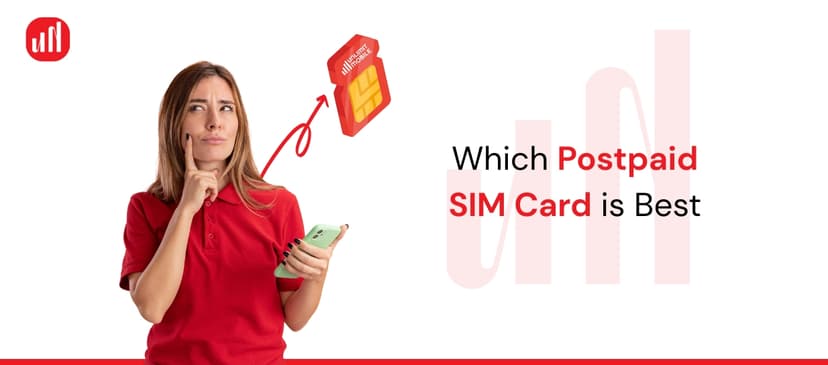
Looking for the best postpaid SIM card in Canada? Compare top plans for newcomers, students, workers, and tourists. See why UnlimitMobile is a smart local choice.
Discover more
blog descriptioksjk dfhjk
Discover more
blog descriptioksjk dfhjk
Discover more

Discover how eSIM makes travel simpler, cheaper, and faster in 2026, with setup tips, real pros and cons, and smart ways to stay connected abroad.
Discover more

See how AI professionals stay connected worldwide with reliable mobile data, eSIMs, security tips, and practical workflows for 2026.
Discover more

Explore how AI eSIM solutions improve travel, IoT, security, and network switching with smarter mobile connectivity in 2026.
Discover more